



Lower back pain (LBP) is one of the most common musculoskeletal (MSK) conditions seen in physiotherapy clinics—affecting office workers, older adults, athletes, and people recovering after medical treatment.
The causes of lower back pain are complex and vary from person to person: prolonged sitting, repetitive movement, poor exercise form, accumulated stress, and muscle or structural imbalances.
These issues significantly impact quality of life—pain levels, mobility, and day-to-day function.
Clinically, physiotherapists often find that “generic exercise routines” may provide only temporary relief if the real root causes are not addressed. This is because each client presents a different pattern of dysfunction, such as:
For this reason, effective lower back rehabilitation requires a personalized program, designed from each client’s real assessment data.
PhysioAI was developed to support physiotherapy clinics with AI that helps analyze posture and movement and systematically generate accurate, individualized lower back rehabilitation programs.
From clinical experience, lower back pain rarely comes from a single factor. It usually results from a connected set of issues, such as:
This is why generic routines often miss the real problem—and may even increase injury risk if the program doesn’t match the client’s structure and limitations.
A personalized program helps physiotherapists:
PhysioAI uses a holistic, three-step evaluation process:
All data is processed to generate a personalized Lower Back Pain Program.
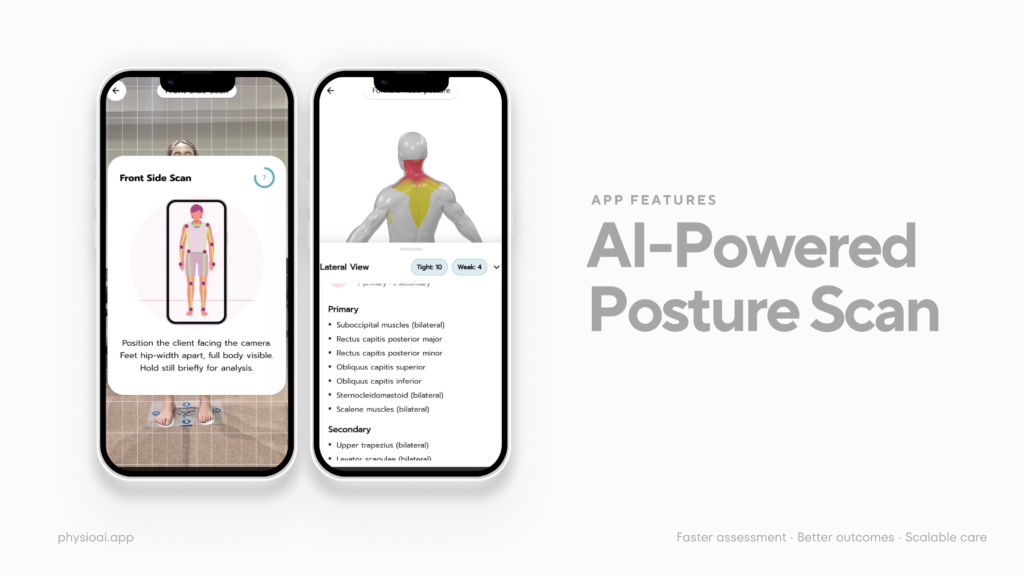
PhysioAI uses AI pose estimation to analyze posture from images and identify key issues that directly affect the lower back, such as:
A) Pelvic Tilt
Anterior Pelvic Tilt: increases compression and lumbar arching
Posterior Pelvic Tilt: reduces the spine’s natural curve
PhysioAI measures angles and severity to establish a clear rehabilitation baseline.
B) Lumbar Alignment
The system can detect patterns such as:
C) Hip Position
PhysioAI analyzes:
These insights help physiotherapists clearly understand the structural picture behind lower back pain.
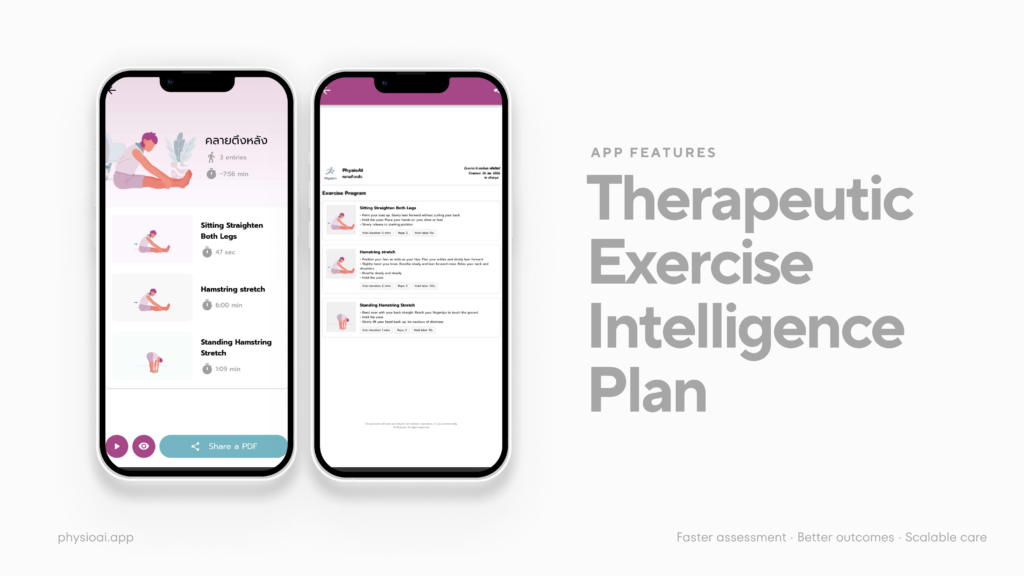
To improve accuracy, PhysioAI evaluates real movement across multiple dimensions:
1) Lumbar Mobility
Assesses:
2) Hip Flexor Tightness
Checks hip extension capacity, directly related to anterior pelvic tilt.
3) Hamstring Tightness
Tight hamstrings reduce natural pelvic movement, forcing the lower back to take excess load.
4) Core Stability
AI detects compensation signals such as:
These assessments help physiotherapists understand the mechanics behind each client’s lower back pain in depth.
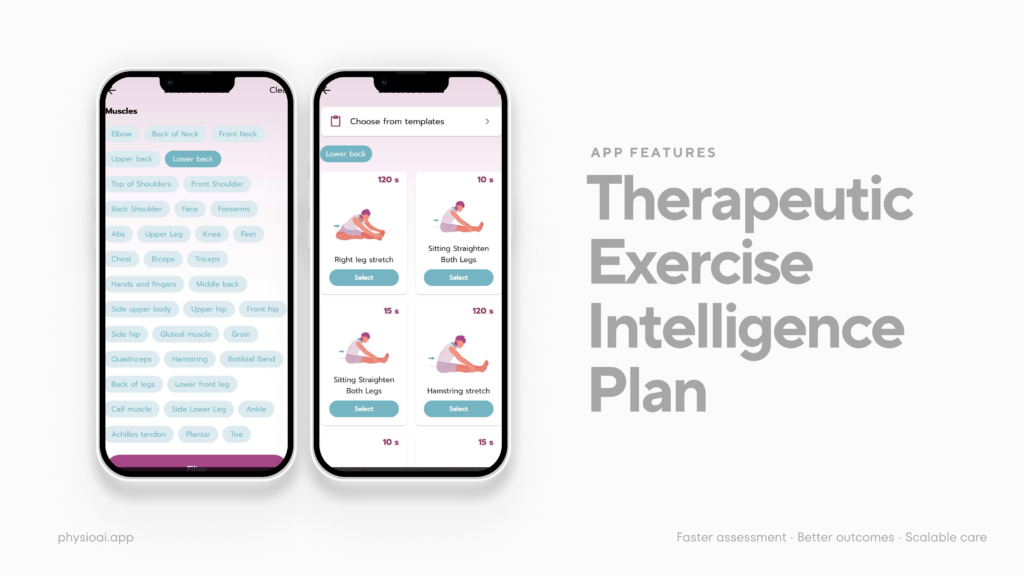
PhysioAI tracks rehabilitation progress by comparing posture images, joint angles, and movement patterns side-by-side in the same view.
This allows both the physiotherapist and the client to clearly see measurable improvements in alignment, posture, and overall balance.
This makes outcomes easier to evaluate, easier to communicate, and easier to optimize—while increasing client confidence and adherence.
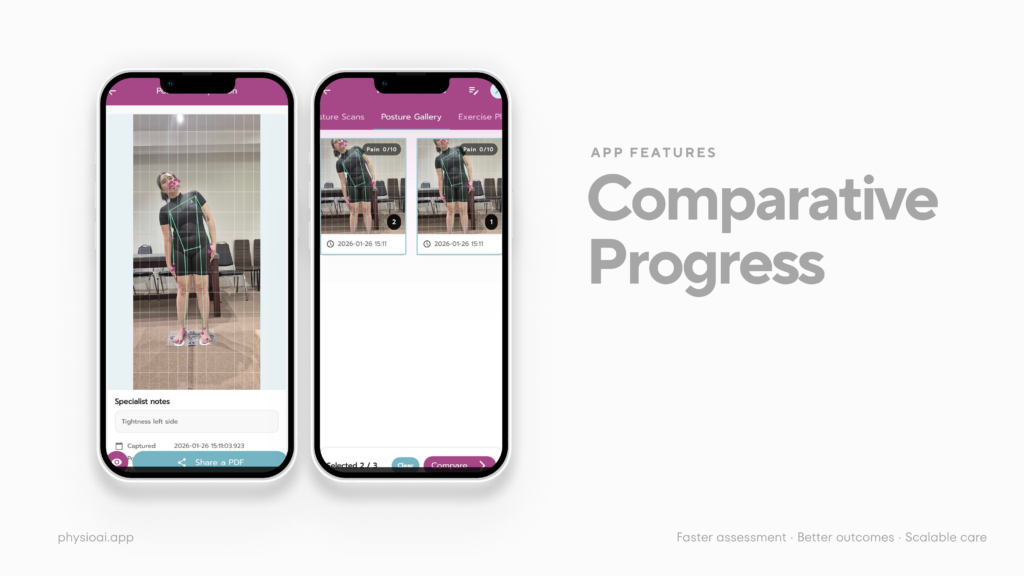
Based on all collected insights, PhysioAI generates a personalized rehabilitation program. Physiotherapists can adjust details according to clinical judgment.
3.1 Cat–Cow Mobility Sequence
Improves spinal fluidity, reduces stiffness, and activates low-impact movement patterns—focusing on:
3.2 Hip Flexor Stretch
Helps reduce anterior pelvic tilt and lower-back compression. Examples include:
3.3 Hamstring Release Protocol
Selected based on tightness level and side-to-side differences, such as:
3.4 Low Back Decompression Routines
Reduces spinal compression and relaxes the nervous system, such as:
Lower back pain cannot be solved with only a few generic exercises. It requires deep assessment and a personalized rehabilitation program designed around the client’s real biomechanics.
PhysioAI supports physiotherapy clinics by using AI to systematically analyze posture, movement, and muscle tightness—helping physiotherapists build programs that match each client’s structure and true pain mechanisms.
The result is rehabilitation that is more accurate, safer, and more effective, reducing recurrence and sustainably improving the quality of clinical care.