


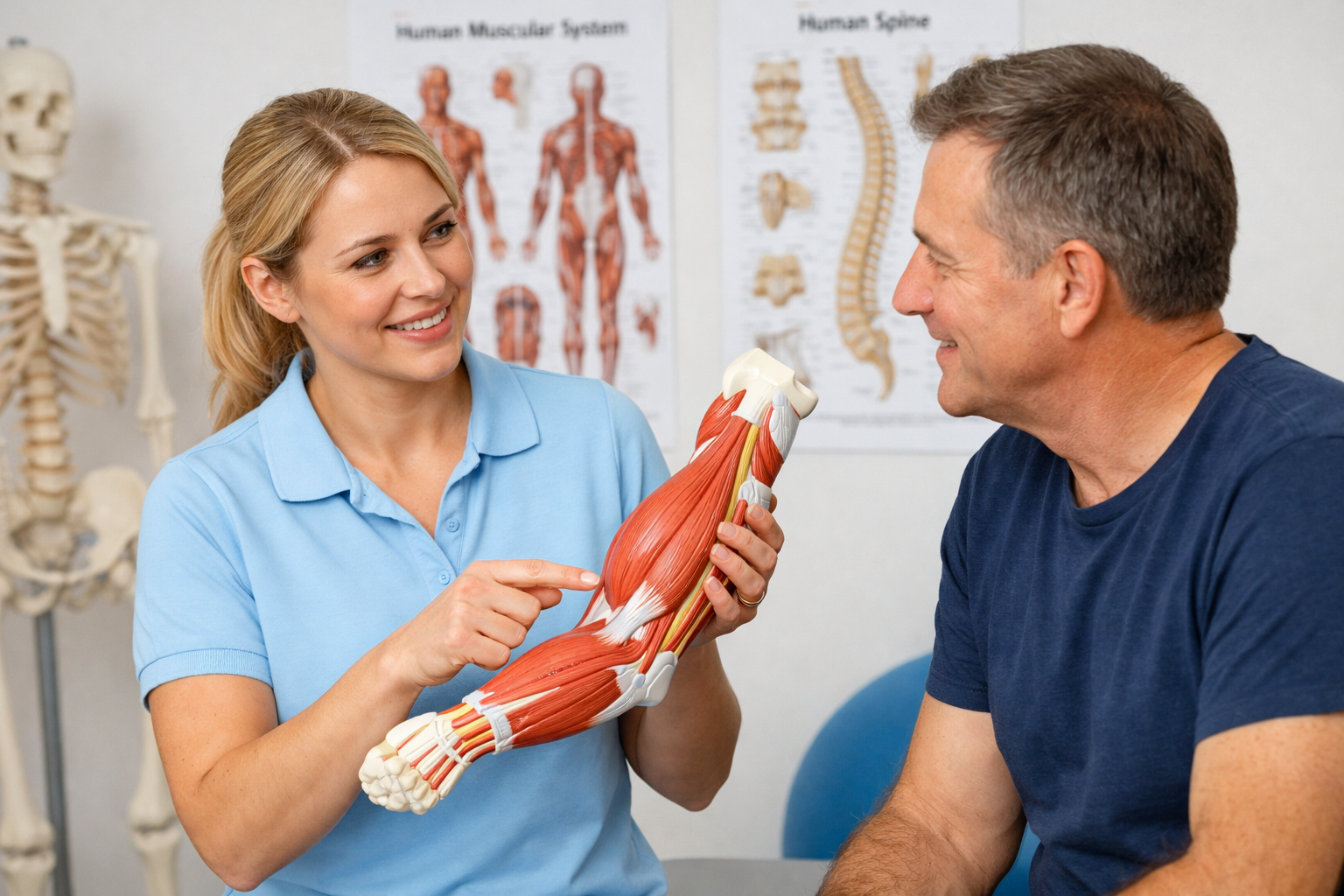
Over the past several years, physiotherapy clinics have played an increasingly important role in caring for musculoskeletal (MSK) conditions—ranging from chronic pain and office syndrome to sports injuries and post-treatment rehabilitation.
At the same time, patient expectations have clearly shifted. Today’s clients want:
have become essential for modern clinics—especially systems that can:
“One platform specifically designed for physiotherapy clinics is PhysioAI—a digital assistant that helps physiotherapists work more easily, more accurately, and deliver measurable outcomes.”
Many people assume physiotherapy is just “pressing, stretching, and using machines,” but in reality, physiotherapists assess, analyze, plan, and track rehabilitation in a structured process.
1) Assessing muscles and movement
Physiotherapists evaluate:
These are core foundations of MSK treatment.
2) Posture & movement assessment
Many issues come from everyday behaviors, such as:
Seeing the whole-body picture is often more important than focusing on only one painful area.
3) Designing non-surgical treatment plans
More than 80% of clinic clients can be supported through:
4) Current challenges for clinics
More patients
This makes accurate, easy-to-communicate information essential.
1) MSK problems are rising quickly
Driven by:
2) Limitations of traditional assessment
Depends on the clinician’s eye and experience
3) Digital tools upgrade physiotherapy work
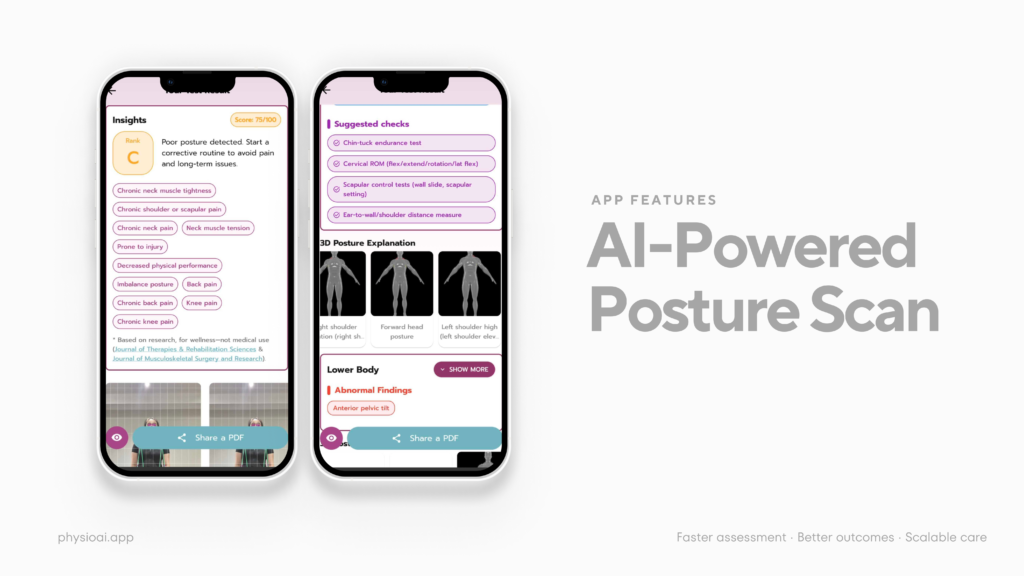
Tools like PhysioAI help by:
4) Hybrid care is the new standard
PhysioAI is designed to support physiotherapists—not replace the profession.
1) AI Posture Scan with consistent standards every time
PhysioAI can detect patterns such as:
2) Personalized exercise plan creation
The system suggests a baseline plan, while the physiotherapist can:
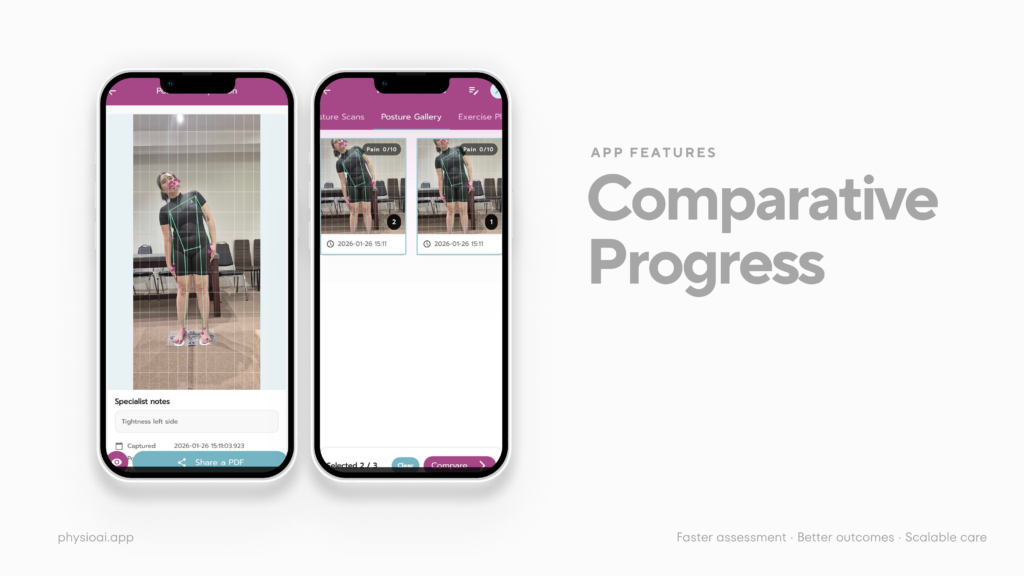
3) Structured progress tracking
4) Reduce workload, improve quality of care
5) Works for both in-clinic and tele-rehab
Suitable for:
PhysioAI helps physiotherapists:
Work with greater accuracy
Communicate better with patients
Provide more continuous care
This is the integration of human expertise with AI to truly elevate rehabilitation outcomes.