



Shoulder pain is one of the most frequent problems seen in physiotherapy clinics. The shoulder is a highly mobile joint with near 360-degree movement and is used constantly throughout the day—working at a computer, lifting, exercising, sleeping, and even everyday phone use. When the shoulder joint system becomes imbalanced, it can lead to chronic pain or significant limitations in function.
Many clients search for pt exercises for shoulder to self-treat. However, “one-size-fits-all” routines often fail clinically because shoulder pain can come from different mechanical causes, such as:
PhysioAI was designed to help physiotherapists assess these issues systematically. Using AI to analyze posture and real movement patterns, PhysioAI then generates a personalized shoulder physiotherapy program—improving treatment precision and elevating patient outcomes.
The shoulder is not just the glenohumeral joint—it is a complex movement system that depends on coordinated function across:
When one component fails, the entire system compensates—often resulting in pain or reduced function.
Common clinical causes include:
Because each client has different movement patterns and muscle imbalances, using the same standard set of exercises rarely solves the problem.
PhysioAI helps physiotherapists analyze each client’s structure and movement and design pt exercises for shoulder that match the real mechanical cause—rather than applying a generic routine.
PhysioAI’s assessment is divided into three key components to generate actionable insights for treatment planning.
2.1 Posture Evaluation
AI analyzes postural red flags such as:
These insights reveal alignment issues that may not be obvious through visual observation alone.
2.2 Movement Screening
PhysioAI guides clients through basic movements such as:
AI evaluates:
2.3 Muscle Imbalance Detection
PhysioAI detects patterns such as:
All findings are used to generate a personalized program.
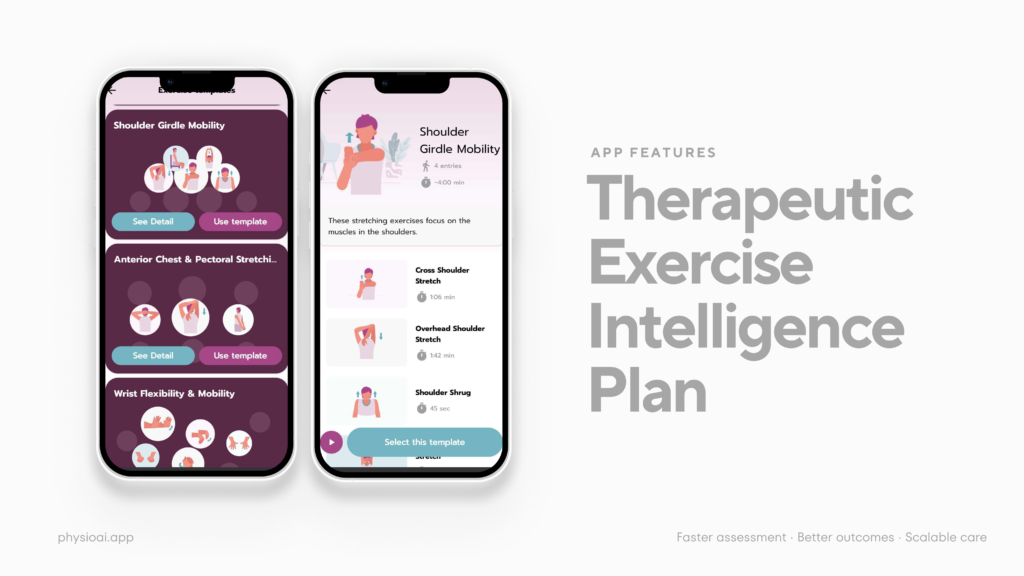
PhysioAI supports physiotherapists in designing a shoulder rehabilitation plan with these core components:
3.1 Rotator Cuff Activation
Examples:
Helps improve shoulder control, reduce “pinching,” and increase stability during arm elevation.
3.2 Scapular Stability Drills
Examples:
Helps reduce scapular dyskinesis and decrease upper trap overcompensation.
3.3 Pectoralis Stretching
Examples:
Helps open the shoulders, reduce rounding, and improve movement space.
3.4 Thoracic Mobility Routines
Examples:
Reduces shoulder compensation and improves smooth overhead movement.
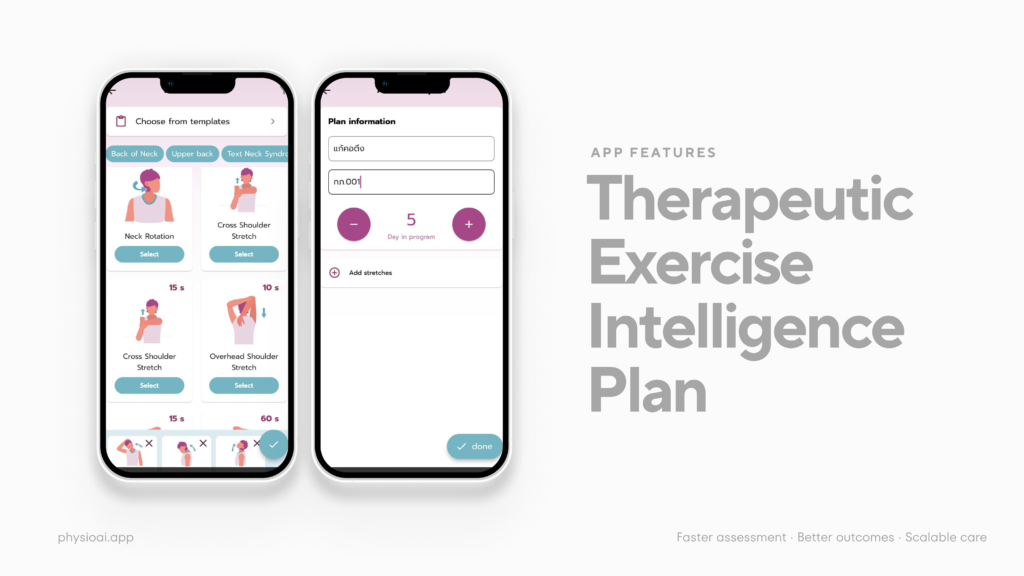
The program is organized into four physiotherapy-based phases:
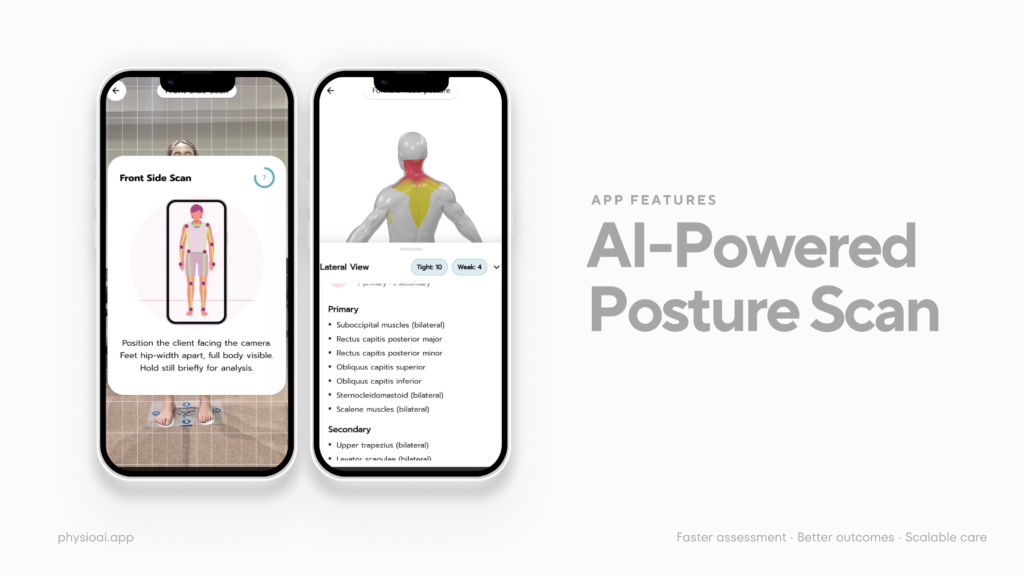
Shoulder pain cannot be solved with generic exercise routines because mechanical causes vary by individual—whether rotator cuff weakness, scapular instability, or thoracic stiffness.
PhysioAI enables physiotherapists to assess shoulder problems systematically and generate personalized pt exercises for shoulder, resulting in rehabilitation that is more accurate, safer, and truly measurable—clearly elevating the quality of care in physiotherapy clinics.