


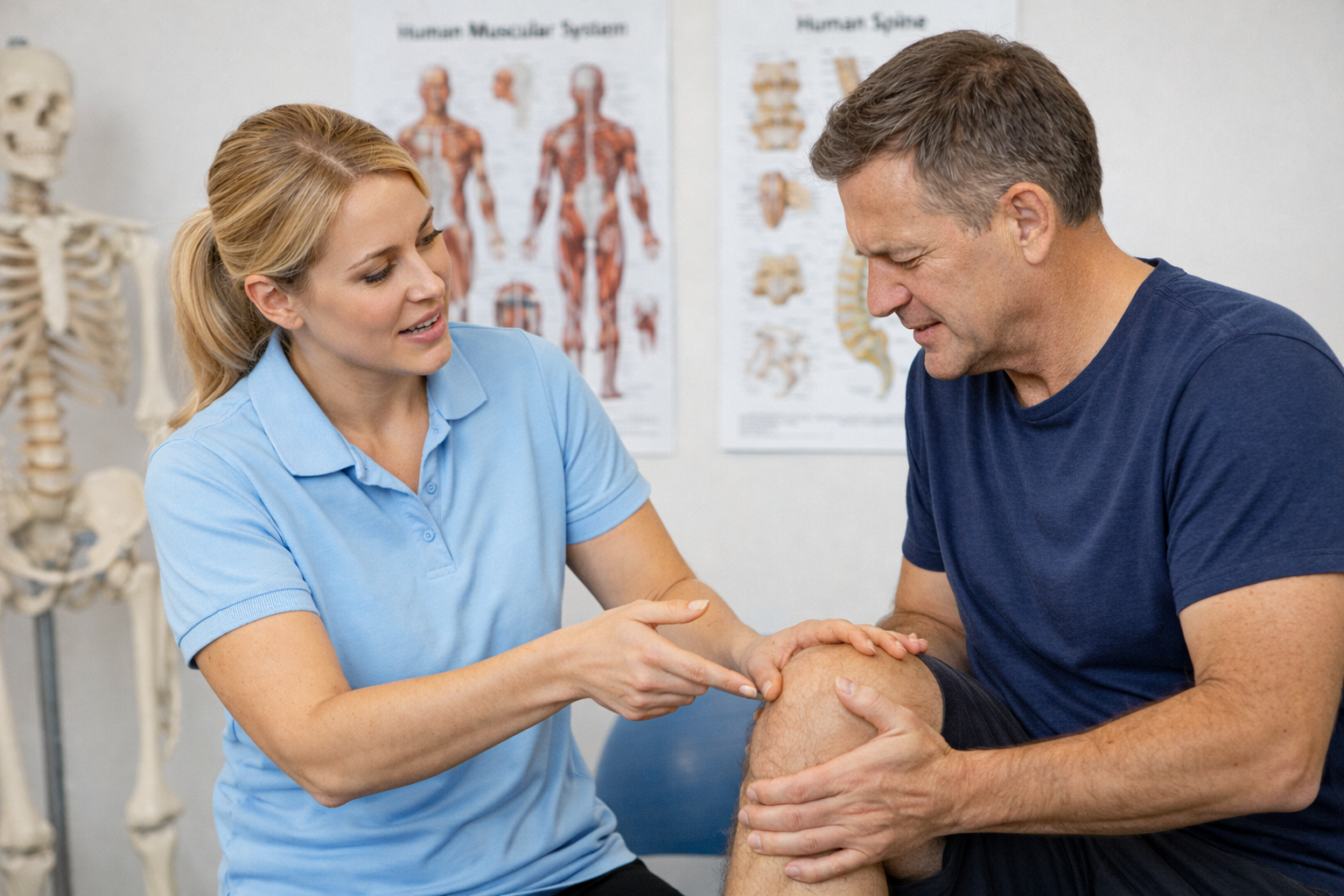
Knee pain is one of the most common issues seen in physiotherapy clinics. It affects people who overuse their knees, exercise with poor form, older adults, athletes, and anyone with structural or muscular imbalances.
These problems can lead to pain, knee fatigue, unstable walking, and limitations in daily life.
Although many clients search for physio exercises for knee pain, generic online routines often fail to address the true root cause—because knee pain presents differently for every individual.
Clinically, the knee does not work alone. It is influenced by:
This is why “one-size-fits-all” programs often provide only temporary results.
PhysioAI was developed to support physiotherapy clinics with AI that deeply analyzes posture and movement, identifies dysfunction patterns such as knee valgus, knee varus, tibial rotation issues, and weak glutes, and then builds a structured, personalized knee rehabilitation program.
From a physiotherapy perspective, the knee depends on multiple systems working together:
As a result, knee pain is often the outcome of dysfunction elsewhere—not a knee-only problem.
Common clinic findings include:
This is why generic exercises are not enough—and can increase risk if they don’t match the true cause.
PhysioAI uses a holistic evaluation framework with three main components:
All insights are processed to generate a personalized knee pain rehabilitation program.
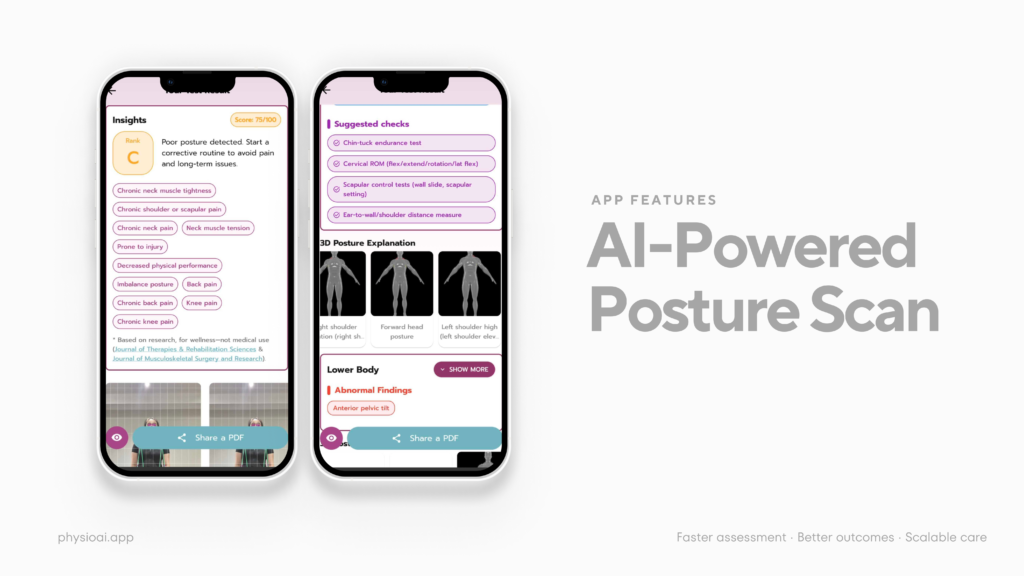
A) Knee Valgus (knees caving inward)
PhysioAI detects signs such as:
This pattern increases risk for ACL injury and medial knee pain.
B) Knee Varus (bow-legged alignment)
The system identifies:
Often associated with lateral knee pain and meniscus stress.
C) Tibial Rotation Issues
PhysioAI evaluates excessive or limited shin-bone rotation, which affects patellar tracking and joint compression.
D) Weak Glutes
Detected through signs such as:

PhysioAI evaluates real movement across key dimensions:
These insights help physiotherapists understand the mechanics behind knee pain in detail.
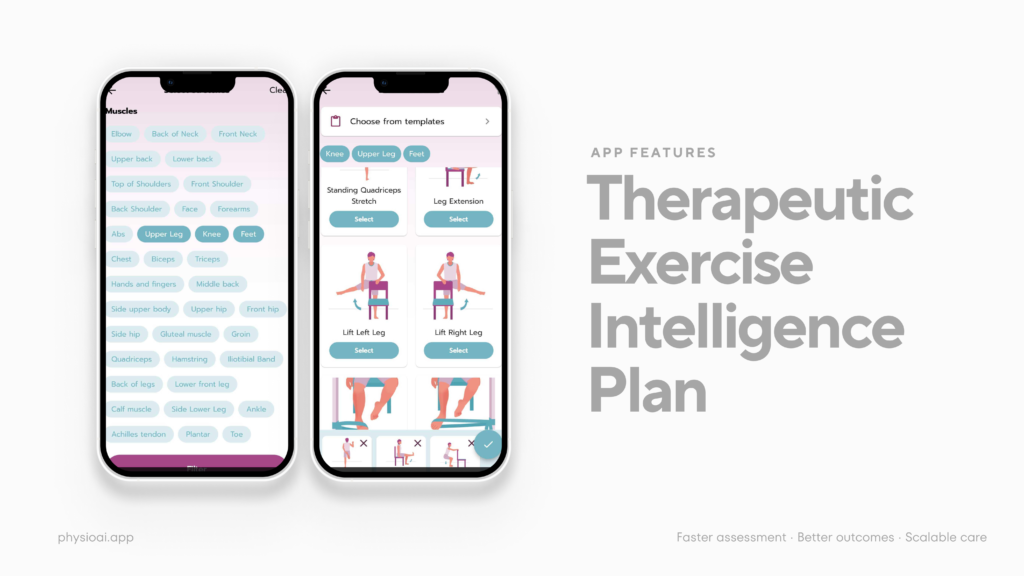
Based on assessment results, PhysioAI generates an individualized rehab program. Physiotherapists can adjust details based on clinical judgment.
3.1 Quad Sets
Activates the quadriceps, improves neuromuscular control, and reduces kneecap-area pain—ideal for early rehabilitation.
3.2 Hamstring Glides
Releases hamstring tightness, supports healthier tibial rotation, reduces knee joint pressure, and improves patellar tracking.
3.3 Calf Mobility
Improves calf and ankle flexibility, reduces valgus collapse, and optimizes squat/knee-bend mechanics.
3.4 IT Band Stretch
Reduces lateral pull on the patella—useful for people with outer knee pain.
3.5 Glute Strengthening
Builds hip strength to reduce knee valgus using exercises such as:
Knee pain cannot be solved with generic exercise routines because the root cause differs for every individual and typically involves multiple body regions.
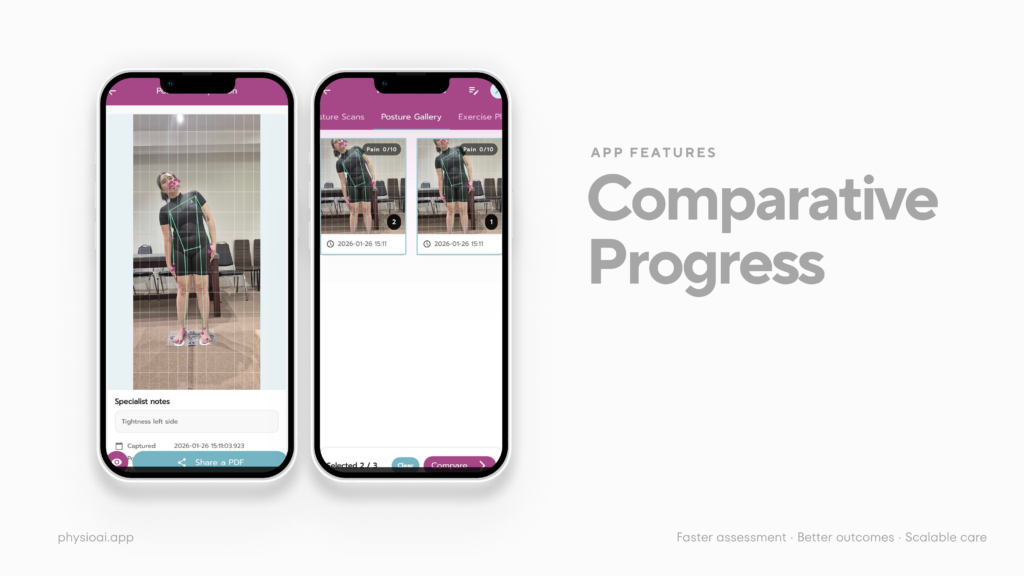
PhysioAI elevates clinical care by using AI to analyze knee alignment, movement patterns, and muscle balance—then generating a personalized physiotherapy program that matches each client’s real biomechanical needs.
The result is rehabilitation that is more accurate, safer, and more sustainable, reducing recurrence risk and enabling clinics to deliver measurable, outcome-driven care.